


July 2026 Lake Nockamixon Fishing Report

Hey everyone, Captain Anthony Awgul the Lake Nockamixon fishing guide here! As part of my mission to help anglers catch more and bigger bass on our local fishery, I publish free monthly Lake Nockamixon fishing reports at the beginning of each month from April through November while guiding this lake full-time.
Want even more detailed information? I also post daily fishing reports and in-depth weekly recaps exclusively for subscribers of the Lake Nockamixon Fishing School. You can learn more and subscribe at www.awgulfishing.com/nockamixonfishingschool.
Introduction:
Warm summertime water increases the metabolic demands of largemouth bass, potentially increasing their feeding needs and sometimes creating excellent fishing opportunities. But it can also make bass more sensitive to efficient feeding opportunities and create short, condensed bite windows that can be unpredictable and difficult to track.
July 2026 was one of the strangest and most unpredictable months of summertime bass fishing I can remember on Lake Nockamixon. If June was the month when the lake seemed to be starting to settle into its summertime patterns for us, then July was the month that reminded us just how quickly those patterns can change.
The entire month was defined by unusual and constantly changing conditions. We went from a brutal heat wave to sharp cold fronts, back into another stretch of extreme heat, and then into more unseasonably cool temperatures. On top of that, we experienced several torrential rainstorms, historic flooding, and even a few days of extremely hazy skies and poor air quality from Canadian wildfire smoke.
June 2026 was characterized by a wide variety of techniques and patterns producing impressive results, but July felt different. The bass rarely seemed willing to settle into one consistent, lake-wide pattern from one day to the next. Instead, July became the definition of “junk fishing.” One day, a frog would catch a couple. The next day, it was a jerkbait that got a few to go. Then it might be a Texas rig, swim jig, offshore finesse bait, or jig. We caught bass scattered throughout shallow water and occasionally ran into groups of fish out deep. We caught them around grass, hard cover, main-lake points, offshore structure, and seemingly random stretches of bank.
In June, we were finding groups of bass stacked up in numbers I rarely get to see on Nockamixon. We still saw glimpses of that in July (especially earlier in the month), but as the weeks went on, the lack of consistency became exhausting. There were certainly short-lived patterns and strong bite windows, but very few of them seemed willing to hold together for long.
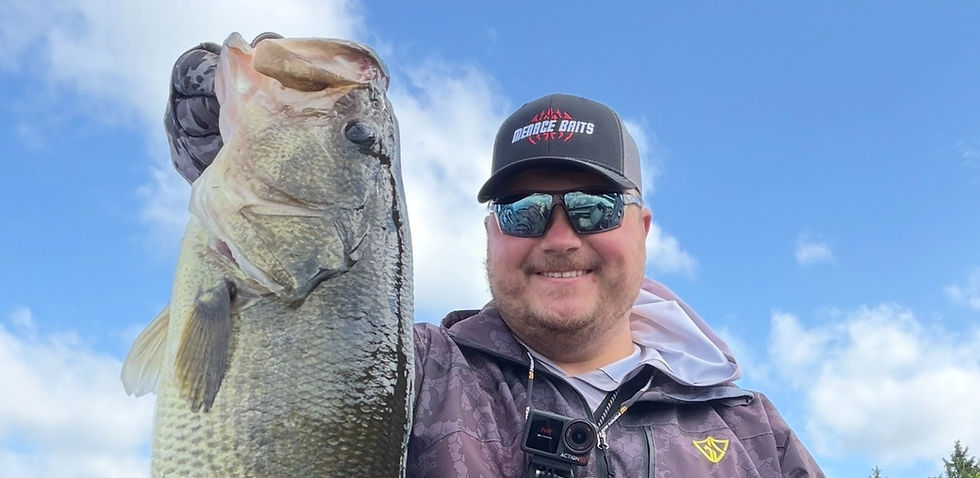
That doesn’t mean the fishing was bad. At times, it was excellent. We still caught several giant bass, including 2 bass over 6 pounds, 5 bass over 5 pounds, and an impressive number of cookie-cutter 3–4.5 pound largemouth. We also caught several quality smallmouth bass this month, including our biggest smallmouth of the year so far—a beautiful 4.5-pound fish.
The numbers were just as inconsistent as the patterns. Earlier in the month, we had a few exceptional days when we caught several dozen fish. On other days later in the month, we had to grind just to put a few bass in the boat.
So while July may not have given us the dependable patterns we enjoyed in June, this was a month that rewarded versatility, persistence, and the willingness to abandon yesterday’s pattern and start solving the lake all over again.

Beginning of the Month Heat Wave:
July began with some of the hottest weather we've experienced all year. During the first several days of the month, daytime highs consistently ranged from approximately 90 degrees to over 100 degrees, with mostly sunny conditions interrupted by a few powerful summertime thunderstorms that dumped tremendous amounts of rain in very short periods.
Water surface temperatures reflected that heat, ranging from approximately 86–90 degrees (Still not as extremely hot as recent years). Between previous rainfall, runoff, and additional pop-up storms, much of the lake had a heavily stained, brown appearance.
Despite those extreme conditions, we still caught great numbers of fish both shallow and deep. The shallow bite was primarily a covering-water game. Topwater frogs and Texas-rigged soft plastics were two of the most productive presentations. The Menace Baits Freaky Frog allowed us to quickly work through expansive stretches of pads, grass, and other shallow cover looking for aggressive bass willing to reveal themselves. I also utilized Texas-rigged soft plastics as an incredibly enticing presentation that could still be fished efficiently through a wide variety of high-percentage areas. But there wasn't one specific type of grass, cover, or stretch of shoreline up shallow that produced consistently enough for me to call it a true pattern. It was much more about covering water until you collided with an actively feeding fish.
Offshore, things were almost the opposite. We were able to locate impressive numbers of bass in deeper water, and some areas produced a lot of fish. Finesse soft plastics continued to be one of our better options for targeting those offshore fish.
The challenge in deeper water wasn't necessarily finding bass; it was finding quality-sized bass; as well as finding fish that were actually willing to bite. There were plenty of smaller fish offshore, but many of the bigger fish seemed harder to consistently locate. Our largest bass of the entire week weighed approximately 4.5 pounds, and almost everything else we caught was 3.5 pounds or less. After the incredible offshore quality we experienced during portions of June, that was a noticeable change.
Overall, the first few days of July felt like tough, classic summertime junk fishing. We caught fish doing a little bit of everything, but aside from some decent numbers sometimes in deeper water, there was no dominant pattern I could confidently rely on from one trip to the next.

Cold Front Creates a Reaction Bite:
After a hot start to the month (literally...) the conditions suddenly changed dramatically. During the second week of the month, a strong cold front moved through. Air temperatures fell into the mid 70s during the beginning of the week, with nighttime lows dropping into the low 60s. Water surface temperatures responded aggressively, falling all the way back into approximately the 76–78 degree range. That was a substantial change from the upper 80-degree water we had just experienced.
Interestingly, this ended up producing one of the better stretches of fishing during the month. The most productive pattern became fishing reaction baits around deeper features. Hardbaits such as crankbaits and jerkbaits were particularly productive, and this pattern produced both our best numbers and some of our best quality of the week, including a beautiful 6-pound Lake Nockamixon largemouth.
The Menace Baits Jolly Jerkbait has been an important bait for me during different seasonal periods because its hard-cutting, slashing action can efficiently trigger predatory fish into reacting. This week was a great example of that. Instead of slowly grinding through areas waiting for a bass to decide whether it wanted to eat, reaction presentations allowed us to cover productive structure and force fish shocked by quick-changing conditions into making instinctive decisions to feed.
We also continued catching some fish around vegetation (a common summertime Nockamixon bass fishing staple for the Awgul Fishing Guide Service). Topwater frogs remained productive throughout expansive stretches of grass, while Texas rigs helped us work through thinner or more isolated pieces of vegetation. Swim jigs also produced around grass edges and other shallow cover.
Rain was another important variable this week. Several of our better bite windows happened while it was actively raining. The rain seemed to activate fish and make them substantially more willing to chase our reaction baits.
Another really encouraging development was the number of reports I continued hearing about giant Nockamixon largemouth. During this stretch of the month, multiple supersized bass in the 6–7+ pound range were reportedly caught by local anglers and showed up at tournament weigh-ins. After many years of seeing incredible numbers of giant bass come from this lake, it has been very encouraging to watch that trend continue into 2026.
It continues to reinforce something I've believed for a while now: Lake Nockamixon might not always be an easy lake to catch bass, but the quality potential of this fishery is exceptional.

Another Heat Wave and Mid-Month Junk Fishing:
By the middle of the month, summer came roaring back. Temperatures climbed back into the 90–100 degree range almost every day, and water temperatures gradually increased from the upper 70s back into the mid 80s. Canadian wildfire smoke also settled across the region, creating unusually hazy skies and periods of poor air quality. As uncomfortable as it was fishing in the intense smoke, these were some of the last "excellent" days of fishing we experienced this month. One day during the thick smoke, we caught dozens of fish; one of which was a 6+ pound Nockamixon largemouth bass (our last giant bass of the month). Perhaps the fish enjoyed the low-light conditions caused by the haze, potentially allowing for more opportune feeding conditions.

Throughout the week, sustained winds out of the west and southwest became another major factor. For us, that wind didn't help. One of the recurring trends I've noticed this year is that strong wind has often made the bite more difficult once the fish moved into the heart of the spawning season back in May. Historically, wind is something bass anglers are often taught to embrace. Wind creates current, reduces visibility, breaks up the surface, positions baitfish, and can make bass less cautious. Earlier in the year, particularly during April, it certainly seemed to help us. But through May, June, and now July, some of our toughest days repeatedly occurred during sustained periods of strong wind. This week was another example.
Another interesting fact was that the bite became inconsistent for us particularly during portions of the early morning and late evening. Those are traditionally periods many anglers expect to produce during hot summer weather, but there were multiple days when those expected productive windows were surprisingly poor for us. Instead, fish seemed to really feed most consistently during the late morning through the early afternoon.
Once again, we found ourselves doing a lot of junk fishing. There were bass caught on multiple different presentations in multiple different environments, but nothing remained dominant long enough to build an entire day around it. That meant keeping a bunch of rods rigged with completely different types of baits and allowing the fish to tell us what they wanted. A frog might catch one. A jig would catch another a mile away. A moving bait might generate the next bite on the other side of the lake. Then we might move offshore and catch a couple using finesse techniques.
When conditions are this inconsistent, I believe one of the biggest mistakes anglers can make is becoming overly committed to one pattern simply because it worked yesterday (or even because it worked an hour ago). July repeatedly rewarded adaptability more than pattern loyalty.

The Lake Refuses to Stabilize:
As the month progressed, July brought yet another dramatic weather change. After the last stretch of extreme heat, temperatures became surprisingly mild. Daytime highs generally ranged from the upper 70s into the mid 80s, while nighttime lows occasionally fell into the low 50s and 60s. That is a substantial temperature swing for late July in southeast Pennsylvania.
Several strong storms also moved through during the early and middle portions of the week.
At this point, we kept waiting for the lake to settle into some type of dependable midsummer pattern. It never really seemed to happen for us. The best description remained the same: junk fishing. Bass were inconsistently available in multiple depths and around multiple types of cover and structure, but very little seemed reliable enough to confidently predict where the next bite would come from.
There were still some scattered fish around vegetation. There were still some groups of fish offshore. There were a few fish holding to hard cover. There were fish roaming points and other transitional areas. But there wasn't one presentation, depth range, or structural feature that allowed us to eliminate large portions of the lake.
Sometimes summertime fishing becomes easier because the fish group up predictably around specific feeding opportunities. This July felt almost like the opposite. The bass seemed spread across so many different environments that the challenge became figuring out which small percentage of those fish were actually willing to feed, especially while fishing out deeper.
As we approached the middle of summer, I must say I was shocked by how inconsistent the shallow bite remained, especially in and around vegetation. Historically, throughout my career and years of experience as a local angler, we've historically catch so many of our summer bass in and around grass. But in July (especially during the second half of the month) it just didn’t seem to be the deal to my surprise. Despite how thick, healthy, and luscious the vegetation looked all month long, I couldn’t figure out how to consistently catch decent numbers of bass in it. Instead, we found more consistency fishing hard cover, deeper spots, and offshore structure and cover.
With the shallow vegetation hardly producing for us, one bait that carried us through the rest of the month was the 3/8 oz Menace Baits Weedless Wobble Jig. We relied heavily on the Black and Blue color, which was especially well suited for the murkier-than-average water conditions. Because this jig is designed to be exceptionally weedless and snag-resistant, my clients and I were able to confidently work it through and around a variety of thick cover where other presentations would have been difficult to fish effectively. That allowed us to generate bites from some of the nastiest, highest-percentage areas; places many anglers might be hesitant to throw a lure into.

End-of-Month Historic Flooding:
The end of the month brought even more unusual conditions. On the evening of Tuesday, July 28, a tremendous rain event hit the Quakertown area, with approximately 5–7 inches of rain falling within only a few hours in some locations.
Roads flooded and were shut down, properties were damaged, creeks overflowed, and reportedly 9 people and 2 pets had to be rescued from vehicles trapped in floodwater, and 8 homes had to be evacuated because of flooding. As a Quakertown resident myself, my basement flooded horribly (I usually enjoy a break from the water once I get home from work, but instead I spent the night pumping out my basement and assessing the damage).
Of course, an enormous amount of runoff entered the lake. Water levels rose significantly, and water visibility dropped even further after clearing up slightly during the middle of the month. The lake became very heavily stained to outright muddy in some areas.
But perhaps most importantly, water temperatures plummeted. After reaching nearly 90 degrees earlier in the month, we finished July with surface temperatures only around 75–77 degrees. That is an incredible swing for one month.

I was actually very optimistic going into these conditions. Perhaps this weather system would be the catalyst needed to fire up the hot summertime bite I had been waiting to see again for several weeks. Historically, I’ve seen strong storms, rising water levels, muddy visibility, and newly flooded shoreline habitat create some exciting bass fishing opportunities. Unfortunately, that wasn’t exactly the case for us.
The fishing continued to be extremely unpredictable. We still caught fish, but this was probably the toughest stretch of fishing we experienced during July. One of the biggest surprises was how poorly much of the vegetation continued to produce. Historically, I’ve seen conditions like these create excellent vegetation patterns, but much of that perfect-looking grass simply seemed lifeless. We could fish long stretches of excellent-looking vegetation without generating a single bite.
Instead, hard cover continued to be the most reliable target. Laydowns, rocks, bluffs, brush piles, man-made cover, and other solid pieces of cover seemed to hold fish better than any vegetation I fished. Jigs continued to be one of our most productive presentations as we finished out the month. This bait produced our biggest smallmouth of the year at the end of the month—a beautiful 4.5-pound smallmouth bass caught by a client on the black-and-blue Weedless Wobble Jig.
Up shallow, we caught the occasional bass on a Menace Baits Freaky Frog, so the shallow vegetation bite wasn't completely nonexistent. However, I saw very little action on anything else up shallow during this time.
Offshore, finesse soft-plastic presentations like Ned rigs and jighead minnows produced better than moving baits and reaction baits. The Menace Baits 3” Finesse Fry and Menace Baits Naughty Ned Worm are good examples of presentations we relied on during this time to tediously convince sluggish bass to bite. Getting those fish to bite was more difficult than usual. As we progressed from the hot and productive offshore bite we experienced in June, our fish became increasingly lethargic, lazy, and unresponsive out deep. Sometimes, I’d spend more than half an hour on a specific group of fish, tediously attempting to get just one to bite. But once I finally got that first bite, I could sometimes get the school fired up for a few minutes.
Looking Forward:
In my opinion, Lake Nockamixon bass fishing in 2026 so far feels “behind schedule.” Each of the seasonal patterns we've identified seem to be starting just a little bit later than usual (Or actually more resemblant of how they used to be back 5-15+ years ago). Who knows exactly why this is. Perhaps it’s the extreme winter we had. Perhaps it’s the overall milder water temperatures we’ve experienced this year. It could be the inconsistent weather conditions, or a combination of countless other variables.
While we got a taste of very good Nockamixon summertime bass fishing in June and again during the beginning of July, we’ve yet to settle into the strong and consistent shallow summertime bite I typically expect. Therefore, I believe August could be very interesting.
Some fish will almost certainly continue utilizing shallow vegetation. Grass remains one of the most important forms of summertime cover throughout Nockamixon, and our vegetation is currently extremely healthy in many areas throughout the lake. I would not allow this stretch of unusually tough fishing in the vegetation to convince me that the grass bite is finished for the summer. Those fish could reposition and return quickly whenever conditions get right again.
At the same time, I expect offshore fishing to remain an important part of the equation, as it usually does all summer long. August is historically a month when baitfish location can become tremendously important. Alewives and gizzard shad provide an incredibly calorie-dense food source, and bass looking to maximize energy intake can take advantage of those baitfish schools around deeper structure, points, ledges, and offshore cover.
Finding those fish with electronics might be relatively straightforward. Convincing them to bite may not be. As we’ve seen throughout the summer so far, many offshore bass have required extremely precise and tediously slow presentations. Sometimes the difference between getting ignored and getting bit is only a slight change in retrieve speed, bait angle, boat position, depth, cadence, lure profile, or simply how many times you're willing to present that bait to the same fish.
I also wouldn't be surprised if August continues being a junk-fishing month. Nockamixon bass can spread into almost every available habitat during the summer. One quality bass may be buried underneath a shallow grass mat. Another could be sitting beside a laydown. Another could be sitting on a main-lake point. And another could be suspending around offshore cover. That's why summertime fishing on this lake can be so fascinating. The entire lake is in play. Instead of asking, “Where are the bass supposed to be?” sometimes the better question is: “Where are the actively feeding bass today?” Those are two very different questions.
Hopefully August brings some stabilization after one of the wildest months of weather we've had in a while. If the fish "settle" and those summertime feeding patterns strengthen again, I wouldn't be surprised to see some more absolutely giant Lake Nockamixon bass—and some impressive numbers of fish—caught over the next several weeks. And if it stays unpredictable? We'll keep junk fishing and covering water until the bass tell us otherwise.
If you’re interested in booking a guided fishing trip with me in 2026, I still have a couple of openings remaining this year! I’m currently booking for the end of October 2026, so be sure to check availability and reserve your date online at www.awgulfishing.com. I’d also recommend joining the cancellation list on the bottom right corner of my website; you’ll be the first to know if any last-minute openings come up due to cancellations.
And as a reminder, if you want to stay fully dialed in with the most up-to-date fishing information; plus connect with a community of dozens of other local anglers, be sure to subscribe to The Nockamixon Fishing School at www.awgulfishing.com/nockamixonfishingschool.
Tight lines, and I’ll see you out on the water.
—Captain Anthony Awgul


Comments